In the quiet spaces between heartbeats and the liminal moments before sleep, there exists a dimension of healing that modern medicine is just beginning to map. This is the realm of the spirit—the original territory of wellness that shamanism has navigated for millennia. To walk this path is not to reject science, but to expand the very definition of what it means to be well.
The First Practitioner: A Timeless Role
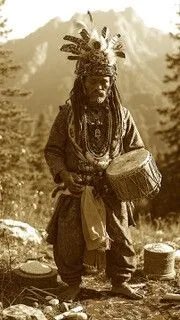
Long before hospitals and pharmacies, the shaman served as the community’s bridge—part healer, part guide, part intermediary. This ancient role understood that illness was rarely just physical. A persistent pain might be tied to a spirit of grief lingering after a loss. A recurring dream might be a soul’s cry for retrieval. The shaman’s role was to listen to these deeper stories, to journey into unseen worlds, and to restore harmony where it had been lost. This is humanity’s most enduring prototype for a holistic practitioner .
Shamanism: The Primal Layer of Healing
At the very foundation of human attempts to understand wellness lies an insight: that illness is often a story of disconnection. This primal layer of healing addresses this story not in the language of cells or biochemistry, but in the language of energy, spirit, and consciousness. It is the original system for treating ailments of the soul—what we might now call existential grief, ancestral trauma, or a profound loss of vitality that no scan can detect.
A Lineage of Direct Transmission
My initiation into this realm came through specific lineages of direct, embodied transmission.
My foundational training was with Antonio Silva (author of Commanding the Light: A Conversation About Paranormal Healing ), a medical intuitive of Portuguese and Russian descent, who introduced me to Siberian shamanic practices through the remote transmission of conscious energy—a study of pure intent as a healing force working directly with the subtle body.
Silva’s approach resonates deeply with my own integrative philosophy. As he states:
“I believe the best of both worlds—standard medical and alternative medical—should be used for the best results, unless one method is in direct contradiction of the other.”
This wisdom has guided my own practice: honoring the strengths of conventional medicine while embracing the profound possibilities of the healing traditions that predate it.
This foundation was formalized and deepened through the Foundation for Shamanic Studies Asia, where I completed the prestigious 3-Year Program of Advanced Initiations in Shamanism™. This extensive training immersed me in Michael Harner’s core shamanic techniques.
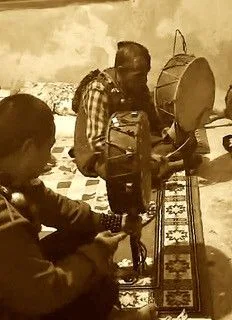
Michael Harner, a renowned anthropologist, developed “Core Shamanism” by distilling the universal, cross-cultural principles of shamanic practice. His approach is a path of knowledge, not of faith, teaching practitioners how to alter consciousness through classic, non-drug techniques—primarily rhythmic drumming—to access hidden spiritual resources for healing and guidance. My training covered foundational methods including shamanic journeying, extraction healing, soul retrieval, and psychopomp work (guidance for the dying and departed). This rigorous program is the highest ‘degree’ offered by the FSS, designed for those who wish to bring shamanic healing into their professional practice.
Most recently, I completed an apprenticeship in the Sherpa and Tibetan Bonpo traditions with the Himalayan Shamanistic Studies & Research Centre in Nepal. These practices are deeply intertwined with the animistic cosmology of the Himalayas, utilizing mantras (sound), physical ritual tools, and offerings to create shifts in the individual’s relationship with the seen world and non-ordinary reality.
A Clarified View: Classical Chinese Medicine as a Kin
While Classical Chinese Medicine (CCM) historically derived from shamanic practices, these roots were eventually pruned. In the Shang Dynasty (c. 1600–1046 BCE), oracles used oracle bones—ox scapulae and turtle plastrons—to communicate with ancestral spirits and the high god Di, seeking guidance on matters from harvests to warfare . This practice, which involved reading cracks formed by heat, was a direct form of shamanic divination that connected the living ruler with the spirit world .
Centuries later, these spirit-focused aspects were deliberately set aside as unreliable. What the medical tradition preserved was not the invocation of spirits, but the understanding of qi (breath of life)—the subtle, animating energy that flows through all things. The framework shifted from divination to energetic medicine: the relationships between organs, seasons, elements, and the meridians through which qi and blood circulate.
What remains beautifully intact within this energetic framework is the concept of the five spirits (wushen), sometimes described as the “souls” of the organs . These are not ghosts or deities, but distinct psychic and emotional aspects of human consciousness, each housed in and expressed through a specific organ system :
- Shen (Spirit/Mind) – Resides in the Heart. It governs consciousness, mental clarity, sleep, and is reflected in the eyes and complexion. It is the overall presence that makes us awake and responsive .
- Hun (Ethereal Soul) – Resides in the Liver. It governs creativity, dreams, planning, and the “coming and going” of the soul during sleep. It provides direction and vision in life .
- Po (Corporeal Soul) – Resides in the Lungs. It governs instinctual responses, physical vitality, and sensory perception (touch, smell). It is the most “earthly” of the spirits, tied to the body’s physical existence .
- Yi (Ideation) – Resides in the Spleen. It governs thinking, concentration, memory, and the ability to form intentions. It helps us process information and apply our minds to tasks .
- Zhi (Will/Mind) – Resides in the Kidneys. It governs willpower, determination, memory storage, and the capacity for deep wisdom. It is the spirit that gives us the resolve to carry out our intentions .
These five spirits are not independent entities; they are interdependent functions of a unified mind-body system. When one is out of balance—for instance, when Kidney Zhi is weakened—we may experience a lack of will, memory loss, or a feeling of being “unmoored” .
Finally, the Taoist philosophy underpinning this medicine is inherently connected to a shamanic view of the cosmos. Humanity is understood as the connection between Heaven and Earth (tiāndìjiān) . “Heaven” (Tian) in this context refers not to a distant deity, but to the natural order, the sky, and the creative, expansive forces of the universe . Our role—and our responsibility—is to be a living bridge, maintaining balance not only within ourselves but between the earthly, practical realm and the greater cosmic order. This is the “kin responsibility” of being human: to live in harmony with nature, community, and the universe, ensuring that the flow of qi, the breath of life, is not obstructed in us or around us.
I keep these layers distinct in my practice. There is significant stigma attached to the term “shamanic”—quackery, some say—and I recognize that not everyone is open to its possibility. However, I remain open to the conversation, meeting each individual where they are.
Integration: The Full Spectrum of Care
In an integrated practice, these layers address different levels of the human experience:
- The Functional Layer (Biochemical): Uses lab tests and nutrition to correct deficiencies and support physiology. It asks: “What is lacking or imbalanced in your chemistry?”
- The Energetic-Structural Layer (Classical Chinese Medicine): Uses acupuncture, herbs, and Qi Gong to regulate the flow of Qi and blood, and balance organ systems. It asks: “Where is the energy blocked or deficient in your meridians and organs?”
- The Spiritual-Narrative Layer (Shamanic/Animistic): Works with consciousness, spirit, and ancestral patterns to address the root story of illness, retrieve lost vitality, and restore a sense of soulful purpose. It asks: “What deeper story or disconnect is this symptom speaking for?”
This approach does not ask you to believe in a single dogma. It simply offers a more complete set of tools. When chronic issues persist despite diligent work on the first two layers, it may be an indication to compassionately explore the third—the original layer, where healing first began.
For Resorts and Wellness Centers
I bring this integrative, full-spectrum approach to luxury wellness environments. My work offers not only healing sessions for your guests but adds a profound layer of depth and authenticity to your wellness offerings. By offering Core Shamanic and Himalayan healing modalities—practices rooted in the world’s oldest healing traditions—your resort distinguishes itself as a destination for true, transformative wellness. I am experienced in working with an international clientele and adapting these powerful techniques to a luxury setting.
 An Invitation
This path is for those who sense that their health challenge is also a meaningful crossroad—a call to a deeper conversation with their own life. It is a practical, grounded exploration of the oldest healing wisdom on the planet, made relevant for the complexities of modern life. Whether you are an individual seeking profound personal healing or a resort looking to offer your guests an unparalleled wellness experience, I am here to support you.
Dr. Fabio Massimo Paciucci
Integrative Health Practitioner | DACM, MSTOM, FMCP
📍 Available for private consultations & wellness engagements worldwide
📞 +1 (917) 299 5422 | ✉️ dr.fabio@fabshealing.com
Schedule a Conversation
“Healing is a matter of time, but it is sometimes also a matter of opportunity.” – Hippocrates
