 In the quiet spaces between heartbeats and the liminal moments before sleep, there exists a dimension of healing that modern medicine is just beginning to map. This is the realm of the spirit—the original territory of wellness that shamanism has navigated for millennia. To walk this path is not to reject science, but to expand the very definition of what it means to be well.
The First Practitioner: A Timeless Role
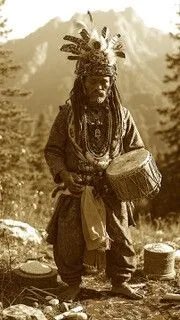
Long before hospitals and pharmacies, the shaman served as the community’s bridge. This figure—part healer, part guide, part intermediary—understood that illness was rarely just physical. A persistent pain might be tied to a spirit of grief lingering after a loss. A recurring dream might be a soul’s cry for retrieval. The shaman’s role was to listen to these deeper stories, to journey into unseen worlds, and to restore harmony where it had been lost.
This ancient role is humanity’s most enduring prototype for a holistic practitioner. It is the root from which all healing traditions have branched, including the energetic frameworks of Chinese Medicine and the contemplative compassion of Buddhist monks.
Shamanism: The Primal Layer of Healing
At the very foundation of human attempts to understand wellness lies an insight: that illness is often a story of disconnection. This primal layer of healing, which we may call shamanism, spirit medicine, or animistic practice, addresses this story not in the language of cells or biochemistry, but in the language of energy, spirit, and consciousness. It is the original system for treating ailments of the soul—what we might now call existential grief, ancestral trauma, or a profound loss of vitality that no scan can detect.
A Lineage of Direct Transmission
My initiation into this realm came not from a single tradition, but through specific lineages of direct, embodied transmission.
My foundational training was with a teacher in the United States of Russian heritage, who worked through the remote transmission of conscious energy. This practice focused on the intentional use of the heart’s field, the energy centers (chakras), and the palms of the hands, guided by specific mental images and activations. It was a study of pure intent as a healing force, bypassing physical tools to work directly with the subtle body.
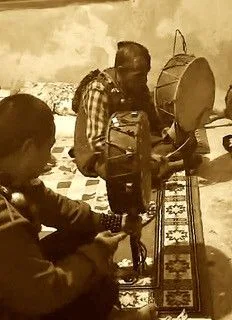
This was later formalized through the Foundation for Shamanic Studies Asia, based on Michael Harner’s core shamanic techniques. Here, I learned the universal practice of the shamanic journey, using rhythmic drumming as a vehicle to access states of consciousness for guidance and retrieval.
Most recently, in Nepal, I completed an apprenticeship in the Sherpa and Tibetan Bonpo traditions with the Himalayan Shamanistic Studies & Research Centre. These practices, which predate and exist alongside Tibetan Buddhism, are deeply intertwined with the animistic and Hindu cosmology of the Himalayas. The work is precise and practical, utilizing mantras (sound), physical ritual tools like the phurba (a ritual dagger for clearing obstacles) and mala (prayer beads), and offerings of incense and rice to create shifts in the individual’s relationship with the seen and unseen world.
A Clarified View: Classical Chinese Medicine as a Kin
Traditional Chinese Medicine (TCM), is a standardized model shaped by 20th-century policies, that often deliberately distanced itself from its more spiritual roots. The framework I reference, and in which I was trained in the U.S., is better described as Classical Chinese Medicine (CCM).
My education was with teachers from Japan, Korea, Vietnam, and pre-standardization Chinese lineages—a diverse universe that preserved concepts like Shen (spirit), ancestral influences, and treatments for possession or soul loss (Gui). This Classical Chinese Medicine maintains a clear, albeit more codified, kinship with shamanic paradigms, viewing the universe as a landscape inhabited by spiritual forces and unseen energies that must be in harmony.
Integration: The Full Spectrum of Care
In an integrated practice, these layers are not in conflict; they address different levels of the human experience. We can think of it as a collaborative model:
- The Functional Layer (Biochemical): Uses lab tests and nutrition to correct deficiencies and support physiology. It asks: “What is lacking or imbalanced in your chemistry?”
- The Energetic-Structural Layer (Classical Chinese Medicine): Uses acupuncture, herbs, and Qi Gong to regulate the flow of Qi and blood, and balance organ systems. It asks: “Where is the energy blocked or deficient in your meridians and organs?”
- The Spiritual-Narrative Layer (Shamanic/Animistic): Works with consciousness, spirit, and ancestral patterns to address the root story of illness, retrieve lost vitality, and restore a sense of soulful purpose. It asks: “What deeper story or disconnect is this symptom speaking for?”
This approach does not ask you to believe in a single dogma. It simply offers a more complete set of tools. When chronic issues persist despite diligent work on the first two layers, it may be an indication to compassionately explore the third—the original layer, where healing first began.
 An Invitation
This path is for those who sense that their health challenge is also a meaningful crossroads, a call to a deeper conversation with their own life. It is a practical, grounded exploration of the oldest healing wisdom on the planet, made relevant for the complexities of modern life.
Dr. Fabio Massimo Paciucci
Integrative Health Practitioner | DACM, MSTOM, FMCP
📍 Available for private consultations & wellness engagements worldwide
📞 +1 (917) 299 5422 | ✉️ dr.fabio@fabshealing.com
Schedule a Conversation
“Healing is a matter of time, but it is sometimes also a matter of opportunity.” – Hippocrates
