 A Manifesto for the Overplanned Soul
I work in places you save up for.
Five-star resorts tucked into jungle edges. Perched above secret bays. Golden beaches in coastlines so saturated they look edited. The brochure promises stillness. The website whispers escape.
Guests arrive with good intentions.
Books they plan to read.
Partners they haven’t had a quiet dinner with in months.
Bodies that have forgotten what silence feels like.
And then it begins.
Someone mentions the sunrise snorkel. The mantas. The cooking class. The new padel court. Beachfront HIIT. The boat to the hidden cove — beautiful, crowded, departing at 6 a.m.
By day two, the spreadsheet appears.
That’s usually when they find me.
The Exhaustion They Cannot Name
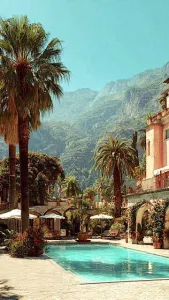 I am a visiting wellness practitioner. I work one-on-one. Treatment rooms layered in nature sounds. Subliminal relaxation tracks. Water or canopy in the periphery — visual anchors for nervous systems that have forgotten how to land.
My job is not to entertain.
It is to listen.
And what I hear, repeatedly, is this:
I don’t know why I can’t sleep. The bed is perfect.
My mind keeps replaying things.
I’m exhausted, but restless. I need to keep moving.
I know I need rest. It doesn’t make sense.
It never does.
Digestion is off. Shoulders live near the ears. Jaw tight. Breath shallow.
They are in paradise, surrounded by engineered beauty, paying a small fortune to be here — and their nervous systems are still braced for impact.
They fill every hour with activity because activity feels productive.
Productivity feels safe.
But the body does not distinguish between a work deadline and a snorkel departure. Stress is stress. Cortisol is cortisol.
They are not on vacation.
They are working remotely — from the beach.
What We Mistake for Vacation
 Mass tourism has engineered a peculiar archetype: the traveler who moves in crowds, even in secluded places, phone extended, documenting something they are not actually inhabiting.
Now TikTok and Instagram have optimized it.
Ten days. Five cities. Forty-seven reels.
The itinerary becomes a performance metric.
The exhaustion is edited out.
This is not travel.
It is content extraction.
What We Have Forgotten
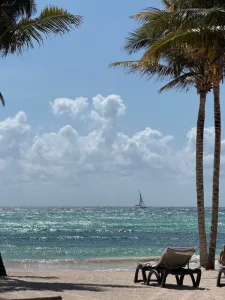 I am Italian. I grew up with dolce far niente coded into my summers.
Not as philosophy.
As physiology.
The idle beach.
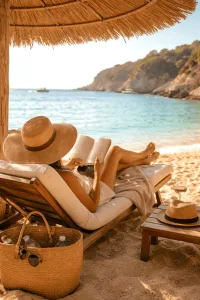
Shallow water brushing your ankles while you stand there doing absolutely nothing. Watching light refract across your skin. Twenty minutes of wave in, wave out.
Card games stretching past lunch. Past caffè. Past the point anyone remembers the score.
A book under the ombrellone until the light shifts.
The pennichella. Forearm over the eyes. Two hours gone without permission.
We ate everything. Pasta. Pizza. Gelato.
We barely moved.
And somehow — mysteriously, to outsiders — we returned restored.
Not because we had done everything.
Because we had done almost nothing.
This is not laziness.
It is not indulgence.
It is a technology of presence.
One refined over generations. Now being replaced by sunrise transfers and content calendars.
The Only Activity Worth Booking
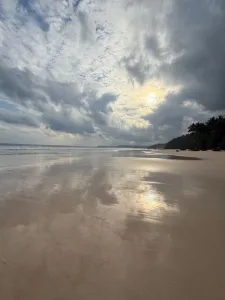 When guests ask what they should do, I tell them this:
The wellness center should be the only other thing you engage in — besides idleness.
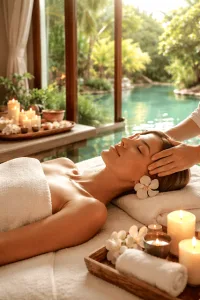
A massage.
A meditation.
A float.
A session where someone holds space for the exhaustion you have been carrying since before you arrived.
Not as another optimization strategy.
As permission.
Stop performing your vacation.
Let the afternoon be shapeless.
Leave the phone in the room.
Take the shoes off.
Sit facing water.
Nowhere to be. Nothing to prove.
This is meditation in civilian clothes.
No mat. No mantra.
Just the quiet rebellion of being instead of doing.
Meditation anchors attention to breath.
Dolce far niente anchors it to sand warmth, wave rhythm, the hum of conversation.
Same nervous system reset.
Different uniform.
This is not passive.
It is active surrender.
And for high performers, it is excruciating.
The Overachiever’s Detox
 Overplanning is not a travel style.
It is a coping mechanism.
We fill blank space because emptiness threatens identity.
We move because stillness invites what we have been outrunning.
The itinerary is not adventure.
It is a barricade.
And like any barricade, it must be dismantled.
Not optimized.
Reduced.
Think of it as a fast.
No phones in the room.
No television.
No alarms.
No more than one anchor per day — or none.
Even that may be too structured.
The real shift comes when you stop counting.
The Pitfall
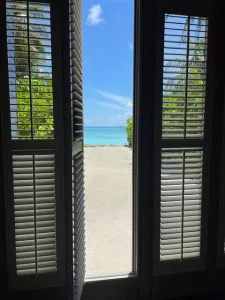 Precision matters.
There is a difference between chosen stillness and anxious rumination.
Between lying in grass watching clouds
and staring at a ceiling at 3 a.m. replaying conversations.
One restores.
The other depletes.
The research often cited about mind-wandering and unhappiness examined involuntary drift — compulsive distraction, cognitive loops.
That is not dolce far niente.
True sweetness requires consent.
Stillness must be entered willingly.
The Longevity of Stillness
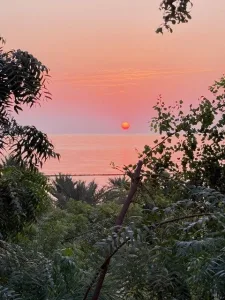 This is not aesthetic wellness.
It is biology.
Chronic busyness sustains sympathetic activation — fight or flight, indefinitely.
The body does not differentiate between a hostile email and a missed boat. It simply records threat.
We track steps. Sleep scores. HRV.
We quantify everything except presence.
What if the most sophisticated intervention is subtraction?
What if the biohack is stopping?
The inability to disengage — without guilt — is not a personality quirk.
It is risk exposure.
The Only Metric That Matters
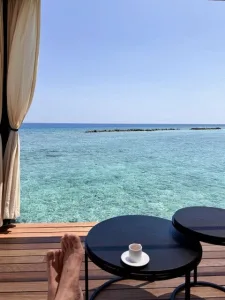 I still travel. I still make lists. Old wiring dissolves slowly.
But when the familiar panic of an empty afternoon rises, I hear my grandmother:
Piano, piano.
Slowly. Slowly.
There is no prize for the most snorkel spots.
No trophy for sunset documentation.
The only metric that matters, at the end of a vacation, is this:
How do you feel when you walk back through your front door?
Scattered.
Depleted.
Or whole. Regulated. Quietly certain you touched something real.
Dolce far niente is not about doing nothing forever.
It is remembering that you were not designed to be productive every waking hour.
The sweetness is still there.
In the shallow bay.
In the chair facing the sea.
In the afternoon with no plan, no phone, no shoes.
You do not need to earn it.
You only need to stop long enough to let it reach you.